Indoor slab work vs. exterior yards
- Can the machine sit below the task? If yes on a smooth slab, electric scissor lifts keep a compact footprint and low emissions. See /electric-scissor-lift-rental/.
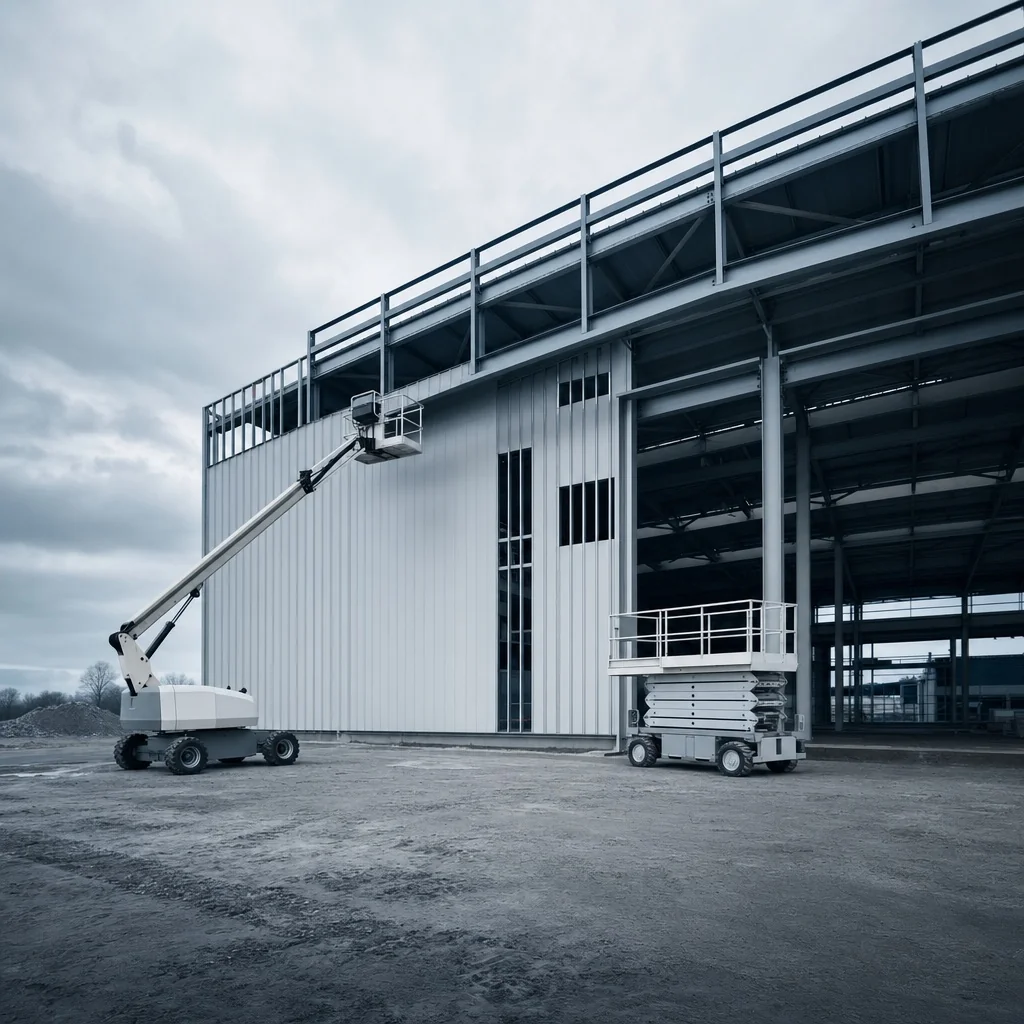
- Need reach over conveyors, racking, or rooflines? Articulating or telescopic booms provide up-and-over or straight reach. See /articulating-boom-lift-rental/ and /telescopic-boom-lift-rental/.
- Working on wet or uneven ground? Memphis soils can soften after storms; rough-terrain scissor lifts and telehandlers handle ruts and grade breaks. See /rough-terrain-scissor-lift-rental/ and /telehandler-rental/.
Height, weight, and route constraints
- Working height and outreach: Overhead MEP work, facade service, and sign installs may exceed scissor ranges and point to booms. Where the path narrows, vertical mast lifts can thread tighter aisles. See /vertical-mast-lift-rental/.
- Floor loading and thresholds: Medical and industrial interiors may have sensitive finishes and weight limits; compact electrics reduce concentrated loads.
- Door and gate widths: Measure every pinch point from yard to task—dock doors, man-doors, bollards, and trailer lanes.
Memphis climate and equipment selection
Heat and humidity influence batteries, cooling systems, and electrical enclosures. For exterior work on open pads and alluvial edges, choose options designed to handle moisture and variable bearing. For interior clean environments, focus on non-marking tires, quiet operation, and low-emission profiles.
Material handling interfaces
If the job includes moving pallets, pipe, or RTU components, map the handoff between lifts and ground storage. - Palletized loads on slabs: /forklift-rental/ - Staged materials across curbs or rough ground: /telehandler-rental/ - Lighting and power for night work: /generators-light-towers-rental/ - Perimeter control around active docks: /temporary-fencing-barricades-rental/ - On-site storage near the task: /storage-containers-rental/
Safety context
Exterior and elevated work involve real exposure. Actual site conditions, the selected unit’s instructions, and facility procedures govern safe operation and setup.