Layout and access planning
- Can fence lines sit outside trailer swing paths, or must lines jog around docks and doorways? Short offsets may save panels and reduce impacts.
- Where do gates need to land? Keep clear stacking room for pallets and carts so gates don’t bind.
- Are there grade breaks or soft shoulders? Panel feet and site-stability factors perform differently on silty or saturated soils common in the area.
Memphis conditions that shape stability
Heat, wind shifts with summer storms, and variable soil bearing change how panels behave over time. On compacted gravel or pavement, bases track well. On looser edges, extra site-stability factors and tighter post spacing may be warranted. Drainage paths should remain open so water does not pond against bases.
Panel and barricade choices
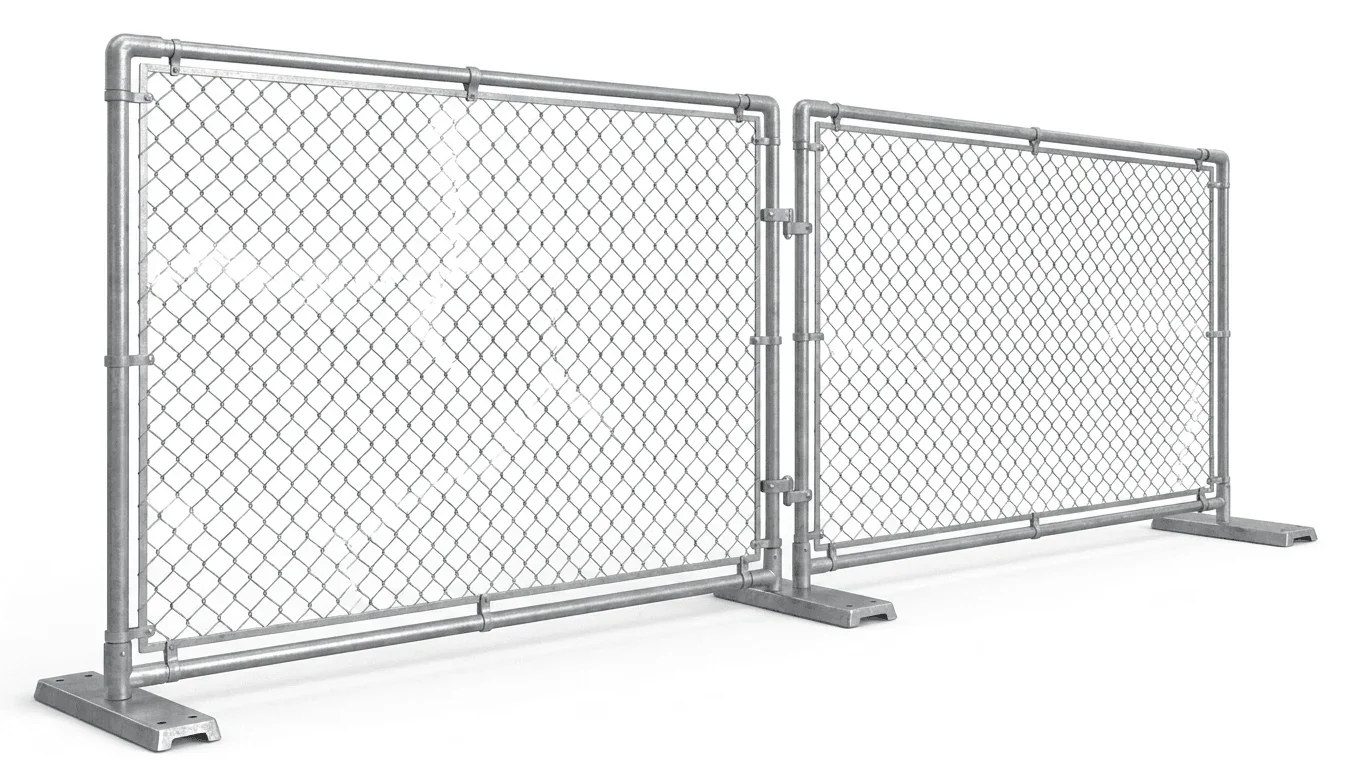
- Standard fence panels: Good for site perimeter and light crowd control when the surface is firm.
- Privacy or debris screens: Useful near sensitive work, but added sail area affects stability. Account for exposure on open pads.
- Water-filled or weighted barricades: Effective for channeling vehicles and pedestrians at facility entries where daily volume is high.
Integrating with site tasks
Barrier lines often support aerial and material-handling work by carving out clear zones. - Elevated maintenance on stable slabs: /electric-scissor-lift-rental/ - Uneven exterior tasks and lot work: /rough-terrain-scissor-lift-rental/ - Overhead work around obstacles: /articulating-boom-lift-rental/ and /telescopic-boom-lift-rental/ - Loading and staging controls: /forklift-rental/ and /telehandler-rental/
Visibility and lighting
Night operations are common around local distribution buildings. Plan sightlines at entries and consider supplemental lighting from /generators-light-towers-rental/ to reduce shadowing at gate checks and barricade tapers.