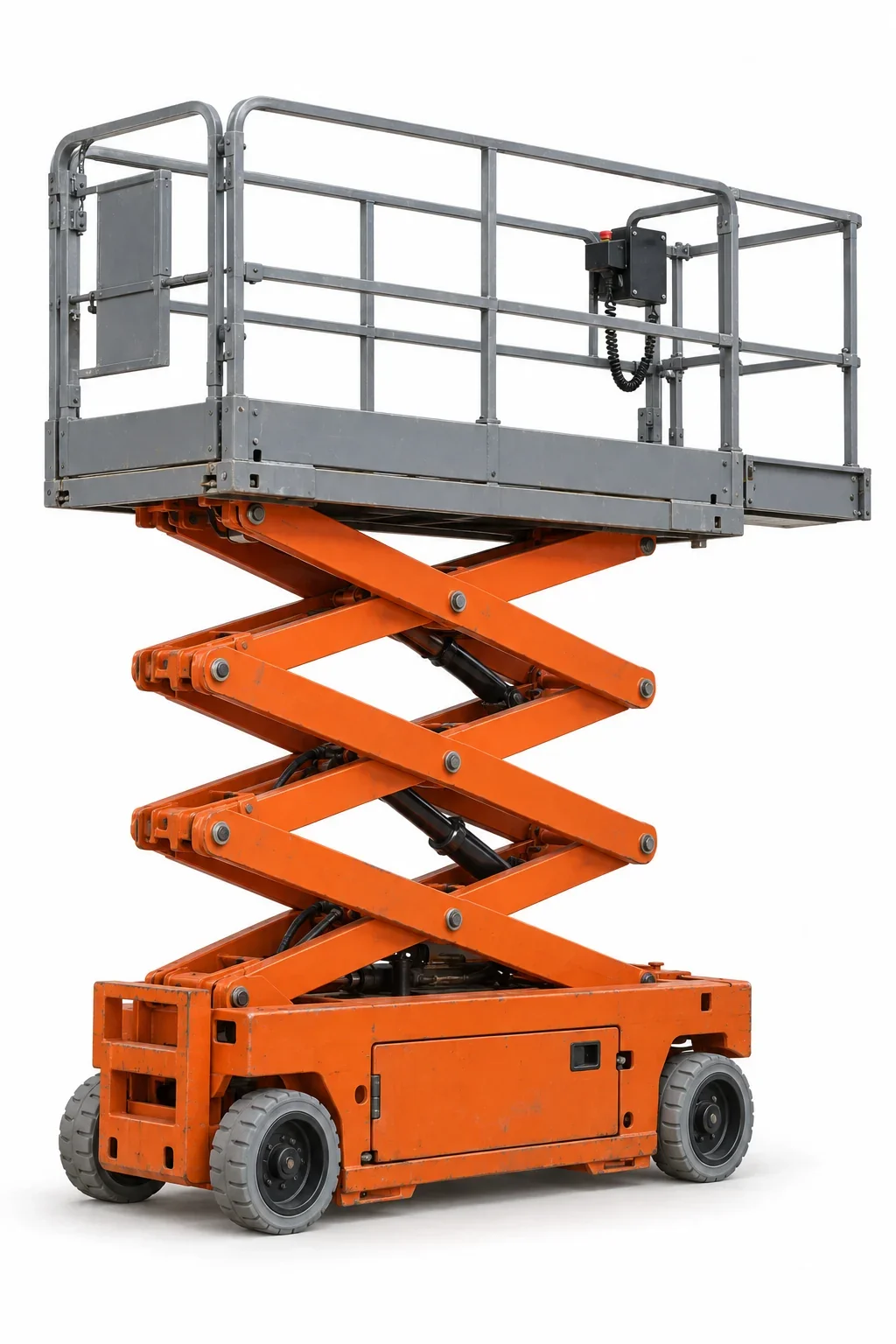
Outside around Memphis, ground support and wind exposure drive the decision: can the surface carry the load, and does the platform need traction and clearance to reach the work?
Rough-terrain scissor lifts serve exterior construction, façade maintenance, signage, and yard lighting around industrial sites in Memphis, TN. Local soils can soften after rain, and heat and humidity add stress to power and electronics, so platform selection centers on stability and reliability.
Surface and stability come first
Ground condition: Loess-influenced and alluvial soils may pump when wet. Wider tires and higher ground clearance improve mobility but do not replace the need for firm support.
Approach path: Curbs, ruts, and unfinished pads call for rough‑terrain drive and rated gradeability. Slab units are not intended for these approaches.
Work geometry: Scissor lifts provide vertical access. If you must reach over awnings, piping, or canopies, a boom may be more efficient; compare at /boom-lift-rental/.
Platform capacity and deck size
Multi-person tasks, panel installs, and lighting runs benefit from larger platforms and higher capacities typical of rough‑terrain models.
Guardrail-to-target distance matters; wider decks can reduce repositioning if the platform sits directly below the work.
Weather and equipment performance
Summer heat and humidity in Memphis increase load on cooling systems and batteries. Look for models with sealed electrics or suitable engine packages for consistent outdoor duty.
Afternoon storms can turn surfaces slick. Actual conditions, the selected unit’s instructions, and site procedures govern exterior or elevated work.
When rough-terrain isn’t enough
If the machine cannot sit beneath the task, or if reach over obstacles is required, consider /aerial-lift-rental/ options, including articulating or telescopic booms.
For interior-only work on finished floors, see /electric-scissor-lift-rental/.
Equipment questions
Questions about Memphis planning
How does Memphis’s unique loess soil affect the choice between electric slab lifts and rough-terrain scissor lifts for exterior facility maintenance?
When soils soften after rain, exterior areas can lose bearing strength. Rough‑terrain scissor lifts, with traction features and wider tires, are better suited to variable ground than slab units designed for finished floors. Ground must still be capable of supporting the machine per its limits.
Do rough-terrain scissor lifts handle dock yards and compacted gravel?
They are intended for unfinished or irregular surfaces within the model’s rated limits. Verify the approach, slope, and surface firmness; conditions and the unit’s instructions determine suitability on the day of work.
What if wind exposure is high around an industrial site?
Wind can limit platform use at height. Follow the unit’s instructions and site procedures, and consider whether a different access method is appropriate for exposed conditions.